Author name: admin

job

Corporate Advisory Associates

Experts in business formation and PRO services. How to Apply: Send your updated CV and a brief cover letter highlighting your expertise to  hr@insight360dubai.com. Note to Candidates: As a firm operating in a regulated sector, we uphold the highest standards of professional verification. Ensure your LinkedIn profile is updated to reflect your professional milestones. Contact Now

job

HR Compliance Consultants

Specialists in UAE Labor Law and regional regulatory frameworks.   How to Apply: Send your updated CV and a brief cover letter highlighting your expertise to  hr@insight360dubai.com. Note to Candidates: As a firm operating in a regulated sector, we uphold the highest standards of professional verification. Ensure your LinkedIn profile is updated to reflect your professional milestones. Contact Now

Blog

Building an Emiratisation Hiring Plan for Your Company

As the United Arab Emirates emerges as a leading global business hub, companies that are part of the region must cooperate with national workforce strategies. One of the most important national strategies is Emiratisation. It is an initiative that is led by the Government, aiming at increasing the participation of UAE nationals in the private sector workforce. For the companies in the UAE, Emiratisation has become an essential regulatory requirement, the days when it was merely a recommendation are long gone. It directly impacts operations such as hiring strategies, compliance obligations and long-term growth. Having a well-structured Emiratisation hiring plan helps a company grow sustainably while remaining compliant with a competitive workforce. Emiratisation and Its Importance Emiratisation is a national policy that helps in ensuring that Emirati citizens are properly represented in the workforce, especially in the private sector. For the longest time, the UAE workforce consisted of expatriates predominantly, with nationals being a minority in private companies. To balance this out, the Government introduced quotas and regulatory frameworks to help even the playing field by encouraging businesses to hire Emirati talent. The big picture of Emiratisation is one of creating a balanced work environment and economy by introducing local talent and reducing reliance on foreign labour, it’s not just mere compliance. Why Your Company Needs an Emiratisation Hiring Plan An Emiratisation hiring plan is important for company sustenance for many reasons: 1. Regulatory Compliance The UAE authorities has mandated to hire a particular target for the companies in the region. The businesses that fail to comply with these quotas will face consequences that might hinder with their growth. 2. Business Sustainability Complying with Emiratisation policies will help the companies maintain stability in the region by maintaining local talent. It ensures that your company is aligned with the national policies and economic priorities. 3. Enhanced Reputation Regulators and stakeholders will further have a positive outlook on the company if they actively support Emiratisation, which can improve brand credibility and make way for opportunities to work with the Government. 4. Access to Incentives The UAE government will provide various incentives such as wage subsidies, training support and financial benefits to the companies that meet Emiratisation targets. Key Steps to Building an Effective Emiratisation Hiring Plan To create a successful Emiratisation strategy, you require a well-structured approach. 1. Assess Your Workforce and Compliance Requirements Assessing your current workforce is critical as it can help find the percentage of Emirati employees in the company. You need to compare it with the required quotas to help you understand the compliance gap and hiring needs. 2. Define Clear Hiring Targets Set targets to comply with the Government requirements as well as your company’s growth. To do this you need to set realistic and measurable goals for Emirati hiring, especially representation on skilled roles. 3. Develop Emirati-Focused Job Roles You have to focus on hiring people for positions that offer long-term career growth and skill development as not all roles are equally suitable for Emiratisation. This includes roles in: 4. Build Strong Talent Pipelines To hire Emirati candidates is no easy task, therefore companies must invest in talent sourcing pipelines which makes their job easier. You can do this through partnering with local universities and training institutions and participation in Government led programs such as NAFIS. You can further build such pipelines through engaging with Emiratisation job portals and recruitment initiatives. 5. Invest in Training and Development Emiratisation is not merely hiring but also developing the local talent in the region. Companies should focus on implementing structured training programs and mentorship initiatives. This ensures that all Emiratis can contribute effectively to the organisation’s success. As a final note on building effective Emiratisation implementation, you need to make sure to create a supportive work environment for employees where they can thrive and monitor progress as well. Emiratisation hiring plan should always be dynamic, ensure to keep track of continuous compliance and review hiring metrics. Common Challenges in Emiratisation Implementation The benefits of Emiratisation are very evident, but companies often face challenges when implementing Emiratisation strategies. These are: However, with the right strategy and expert support, this can be reduced from a complex challenge into a manageable process. How Insight360 HR Compliance & Advisory Can Help Structuring and executing an Emiratisation hiring plan is no easy task, it requires deep expertise in the UAE labour laws and compliance frameworks. This is where Insight360 HR compliance & advisory excel – We support businesses by Designing customized Emiratisation hiring strategies that not only keep up with the regulations of the Government but also meet the specific requirements of businesses in the UAE. We assist with workforce planning and quota management alongside recruitment, onboarding and HR advisory services. With a structured and strategic planning partner like Insight360 by your side, you can transform Emiratisation from a compliance obligation into a competitive advantage.

How to hire top talent in UAE
Blog

How to Hire Top Talent in the UAE’s Competitive Market Using AI Tools & ATS Software

Hiring top talent in the UAE has become a very challenging job as the landscape has evolved into a competitive and rapidly transcending one. With economic diversity, flow of mega-projects, and digital transformation initiatives at its peak across UAE and Saudi Arabia, the organisations are under pressure to perform well through hiring top talent faster and more efficiently. Traditional methods have proven to be rather ineffective in the current landscape, as it’s not a very efficient way to go about things with the rise in people in the field, scattering real talent all over the place. Using manual screening and other traditional methods, companies may lose high-quality candidates to candidates who take advantage of the systems that are pre-existing. This where AI tools and Applicant Tracking Systems are giving a clever spin to recruitment. The New Reality of Hiring in the UAE Since the UAE job market has experienced unexpected growth, organisations have started expanding their workforce with multilingual talent, adapting to the new standards demanded and to nationalization policies such as Emiratisation and Saudization. Parallell, the demand for sectors like technology, healthcare and finance has sky rocketed. This demands companies must not only attract talent but also identify the right talent at the same time and quickly. Hence, AI-powered recruitment solutions are designed to address these shortcomings and the necessity for fast hiring of required talent. How AI Helps You Hire Top Talent Faster AI recruitment helps recruiters save time by automating the most time-consuming and hectic parts of hiring processes such as screening resumes and scheduling interviews by using tools such automated resume screening and AI powered sourcing tools. Automated resume screening is where AI scans thousands of applications and segregates candidates based on their skills, experience, and job fit and bins them into different ranking metrics. This helps recruiters save time by shortlisting candidates more efficiently rather than manually reviewing each resume. AI-powered sourced tools can further enhance the automation of recruitment process by searching millions of candidate profiles across platforms, ensuring to reach both active and passive talents around the heterogeneous market. This drastically improves the chances of finding top tier candidates as they search for passive profiles where the candidates may not be actively looking for a job as well. The Role of ATS Software in Modern Recruitment An Applicant Tracking System (ATS) is an important architecture in the modern day recruitment system where everything is automated. It centralises all candidate data, streamlines workflows and makes sure that no potential hire is missed out. ATS platforms provides recruiters with the opportunity to manage job postings, tracking applicants and collaborating with hiring teams. They integrate AI capabilities such as keyword matching and candidate ranking to further filter what kind of talent they are looking forward to work with. By using ATS, companies can: In the UAE, modern ATS platforms are specifically designed to support the regional demands such as bilingualist (Arabic and English) processing and compliance with local data regulations. Enhancing Candidate Experience with AI In an increasingly competitive market, candidates play an important role in attracting top talent. AI tools help in creating seamless and engaging hiring journey. Features such as chatbots can provide immediate responses to any doubts or queries that might be raise by applicants and keeps them updated throughout the process.Furthermore they enable personalised communication, making candidates feel like their time is valued and making them well informed at the same time. This improves the branding of the employer at the same time. Data-Driven Hiring for Better Decision Making The biggest upper hand of using ATS and AI software is access to real-time recruitment analytics. As an alternative to depending on the intuition of recruiters, hiring managers can make decisions based on data. They provide insights such as: The Future of Hiring in the UAE Adopting AI in recruitment isn’t merely a trend anymore- it has become sustenance in the recruitment market. As competition is increasing rapidly, we need the help of AI recruitment to help increase company efficiency. Future trends indicate a tonal shift towards possibilities such as: Conclusion In the diverse and blooming landscape of the UAE, organisations must step up their game from the traditional recruitment approaches and adapt to smarter technologies such as AI tools and advanced ATS solutions, leveraging them is no longer a choice of preferences, but rather a choice of sustenance in the market. At Insight360 HR Advisory and Compliance, we believe that hiring is not just merely filling necessary roles but rather identifying the right talent that puts companies on the map and driving them further in the long-term. By combining intelligent automation, data-driven insights and strategic recruitment expertise, companies can simplify their hiring process while maintaining integrity, precision and quality. We embrace modern technologies and integrate them wherever improvement is due and efficiency is must. Companies taking this futuristic vision can help them be more agile with up coming trends and make future-ready teams that can thrive in the diverse and rapidly growing UAE market.

Blog

5 Things To Keep In Mind When Choosing a PEO or EOR in the UAE

Growing your team in the UAE or even across different countries is exciting. But let’s be honest it can also get a bit overwhelming. From understanding labour laws to managing payroll and onboarding there is a lot going on behind the scenes.  That’s where a PEO or EOR comes in. They handle the heavy lifting so you can focus on your business. The catch is not every provider will give you the same level of support. Choosing the right one can make your life much easier and help you avoid unnecessary headaches.  Here are a few simple things to look out for:  Understanding of UAE Labour Laws  You want someone who really knows how things work in the UAE. Labour laws contracts and Emiratisation requirements are not things you want to get wrong.  A good partner will guide you properly and make sure everything is done the right way from the start.  Smooth and Accurate Payroll  Payroll should never be a stress point. Your team relies on getting paid correctly and on time without any confusion.  A dependable provider will make sure everything runs smoothly so you do not have to double check every detail.  Ability to Grow with You  If you are thinking about expanding your team your PEO or EOR should be able to grow with you.  The last thing you want is to switch providers in the middle of your growth journey.  Easy to Use Technology  No one wants complicated systems. The right provider will make things feel simple and organised with the help of good technology.  It should be easy for you and your employees to access what you need without confusion.  Trust and Support  At the end of the day this is about trust. You are handing over an important part of your business, so you need to feel confident in your partner.  Good support can make a huge difference especially when you need quick answers or guidance.  Grow Smarter with Insight 360  Choosing the right PEO or EOR is not just a technical decision it is about making your business run more smoothly and giving your employees a better experience.  When you have the right support in place everything feels easier and more manageable.  At Insight 360 Dubai we keep things simple compliant and stress free so you can focus on growing your business. If you are planning to expand your team, we are here to support you every step of the way. 

Payroll outsourcing services UAE
Blog

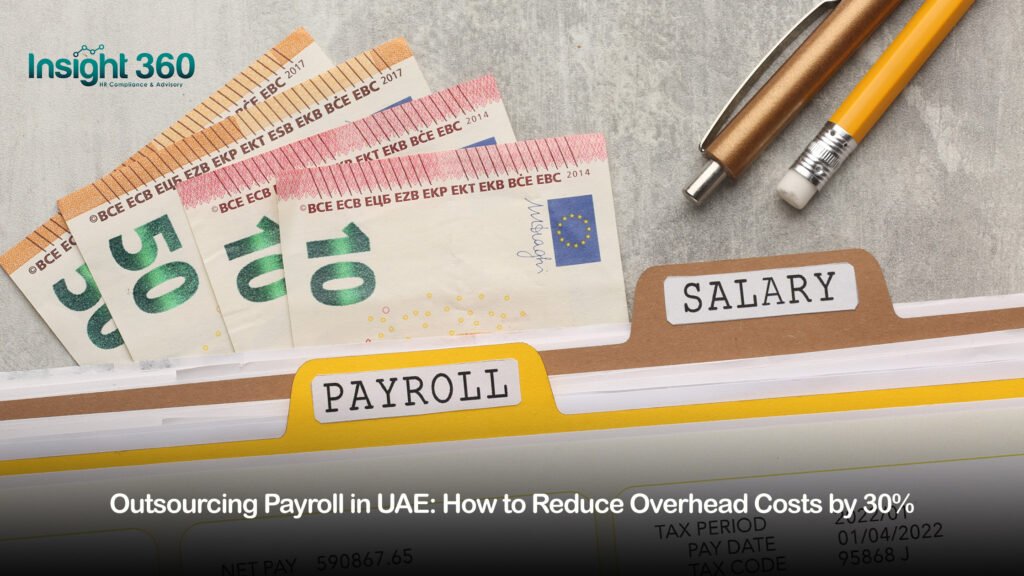
Outsourcing Payroll in UAE: How to Reduce Overhead Costs by 30%

The United Arab Emirates have become one of the biggest business destinations in the world. With an exceptional economy, diverse workforce and exponentially growing industries, companies that operate in the UAE must deal with a mass agglomeration of complex operational responsibilities. Among such responsibilities, the most challenging one for many organizations is payroll management. Payroll is not a two-dimensional task as to common belief; it’s a very complex and slightly convoluted job to deal with depending on the company. It involves managing salary structures, calculating deductions, ensuring compliance with local labour laws and eventually submitting salary payments through Wage Protection System. Due to such heavy-lifting, payroll management can become a tedious, costly and time-consuming process for businesses. To bring such challenges to light, many companies situated in UAE are choosing to outsource such payroll functions. This scheme is brought into life by partnering with various payroll providers, which in-turn helps companies reduce the operational expenses and save time by a significant margin, reducing overhead costs up-to 30% while increasing efficiency and accuracy. Analyzing Payroll Management in the UAE The quick and logical response to dealing with Goliathan tasks such as payrolling is to outsource them, as it is with its own legal requirements. Payroll management is governed by specific regulations that must be followed strictly, such as UAE labour law as well as other systems which is designed to protect the employees and ensure timely salary payments. As mentioned previously, one of the most significant systems as such is the Wage Protection System (WPS). This salary transfer system is electronic and it mandates companies to pay the employees through certain financial institutions as for Government authorities to monitor the salary payments to maintain transparency and to further ensure that the employees receive their respective salaries on time. In addition to this compliance, companies must also manage employee incentives such as end-of-service gratuity, overtime payments and so on to further make the payroll processing more complex. Why In-House Payroll Can Be Expensive Several businesses choose to manage the said payroll internally itself, but they have very conspicuous and hidden costs which may put the company at risk with its performance and efficiency. Such must companies hire payroll specialists or HR professionals who understand payroll regulations and its convoluted, complex requirements. They must also install a payroll software along with employee training, and administrative resource to manage monthly salary processing with Role Based Access to systems as well. Hence managing payroll internally can become a very financially and operationally frustrating task and a burden as well for growing businesses. How Payroll Outsourcing Reduces Overhead Costs Outsourcing payroll will give way for businesses to transfer such hectic payroll responsibilities to specialized service providers who have expertise in local payroll regulations and advanced payroll systems. This approach is more optimal as we don’t have to separately assign a specific person as employee who is well-aware about the payroll regulations and the business can also avoid the burden of installing its own payroll system. It helps companies reduce operational costs while ensuring compliance with UAE laws. Lower Staffing Costs Maintaining an in-house payroll department requires hiring a skilled professional along with administrative staff, who could use their expertise else-where and increase the company’s efficiency instead. Outsourcing eliminates such unnecessary expense, reducing salary expenses and training costs. Paying a predictable fee to a payroll provider is much more cost effective. Reduced Technology Expense Payroll management in-house requires reliable software to process salaries, generate reports and manage employee records. This software must be regularly audited to keep up with the current regulations and for security purposes. Payroll service providers have their own advanced systems which could automate a lot of the tasks and stay up-to date with dedicated employees within those service providers. Improved Compliance and Risk Reduction Compliance with UAE payroll regulations is quintessential for the existence of businesses in UAE, outsourcing payroll will help companies avoid fatal mistakes from in-house employees and instead depend on experts who stay updated with changes in labour laws and regulatory requirements. Increased Operational Efficiency In-house payroll processing requires careful attention to detail which should be further supervised by an administrative staff, which will reduce its operational efficiency by a margin on the long run. Hence outsourcing payroll task, internal teams can focus on strategic activities such as recruitment, employee engagement, and business growth to improve operational efficiency further. Conclusion Outsourcing payroll is a smart strategy for businesses in UAE to reduce computational, operational and financial tasks along with improving efficiency. With expert support from Insight360Dubai, companies can get a focused and streamlined payroll management with WPS compliance which will eliminate administrative burdens. Their reliable outsourcing services help ensure organizations to save costs, maintain accuracy, promote optimal operations and focus on a sustainable way of growing business in UAE.

Hire HR consultant in dubai
Blog

The Strategic Hire: How to Know When It’s Time to Bring in an HR Consultant

When you first started your business, “HR” probably just meant you and a few spreadsheets. You handled the hiring, tried to figure out the local labor laws over coffee, and personally made sure everyone got paid on time. It was manageable, until it wasn’t.  As a business grows, the “people side” of things naturally becomes more complex. Suddenly, you aren’t just hiring friends; you’re managing diverse personalities, navigating intricate compliance regulations, and trying to build a culture that doesn’t crumble under the pressure of scaling.  Knowing when to step back and bring in an expert is one of the most strategic moves a leader can make. Here is how to identify that tipping point and why an HR consultant might be the missing piece of your puzzle.  The Subtle Signs You’ve Outgrown “DIY” HR  Sometimes the need for help doesn’t arrive with a bang; it arrives in a series of small, frustrating leaks.  What an HR Consultant Actually Brings to the Table  Many leaders hesitate to hire a consultant because they view it as an “added cost.” In reality, it’s a cost-saving measure. An HR consultant doesn’t just “do HR”—they build the infrastructure that allows your business to run without your constant intervention.  1. Strategic Talent Acquisition  It’s not just about filling a seat; it’s about finding a “culture fit.” Consultants help you define your employer brand so that the right people want to work for you. They refine the interview process to ensure you aren’t just hiring the person who is best at interviewing, but the person who is best at the job.  2. Bulletproof Compliance  Especially for businesses in the UAE, the regulatory landscape is unique. From MOHRE regulations to specific Free Zone rules, a consultant ensures your employee handbooks and contracts are airtight. This “safety net” allows you to sleep better at night knowing you aren’t one audit away from a crisis.  3. Performance and Growth  How do you reward your best people? How do you manage underperformers without creating a toxic atmosphere? Consultants implement Key Performance Indicators (KPIs) and feedback loops that make growth objective and transparent.  Moving From Reactive to Proactive  The biggest difference between a struggling business and a thriving one is how they handle their people. A struggling business is reactive: they fix problems after they happen. They hire a lawyer after a lawsuit or search for a new manager after the old one quits.  A strategic business is proactive. By bringing in an HR consultant, you are building a foundation. You are setting up the training programs, the clear career paths, and the efficient payroll systems today so that they don’t break tomorrow when you double in size.  Finding the Right Partner  In a global business hub like Dubai, the “local” factor matters immensely. You need a partner who understands the cultural nuances of a multicultural workforce and the specific legalities of the Emirates. You don’t just need a consultant; you need a strategist who can translate your business goals into a people plan.  When it comes to navigating these complexities with precision and care, Insight 360 is the best HR consultant in Dubai. Their expertise in the local landscape, combined with a human-centric approach to HR, ensures that your business doesn’t just grow—it thrives with a team that is motivated, compliant, and ready for the future. 

Employment Visa

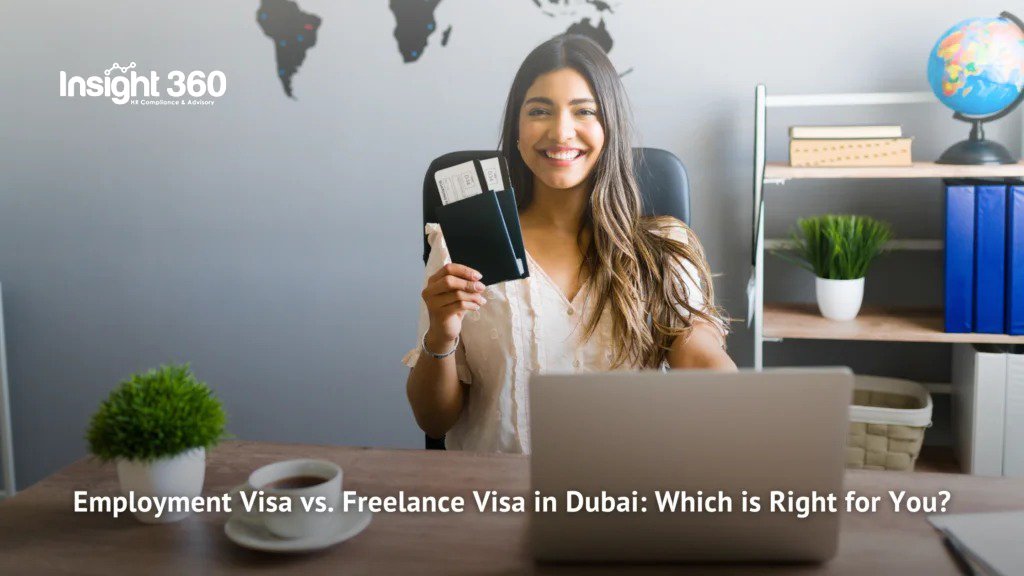
Employment Visa vs. Freelance Visa in Dubai: Which is Right for You? 

Whether you are planning to move for a corporate role or looking to work independently, understanding the visa options available is essential. Two of the most common choices for foreign workers are the Employment Visa, which is sponsored by a Dubai-based employer, and the Freelance Visa, ideal for self-employed individuals. Each has its own benefits, requirements, and best-fit scenarios depending on your professional goals.  Dubai Employment Visa?  An Employment Visa is designed for individuals who have secured a job offer from a company based in Dubai. In this case, the company acts as your sponsor and is responsible for managing the visa process. To be eligible, the employer must be a licensed entity operating within Dubai—either in the mainland or in a Free Zone. This visa is generally valid for 2–3 years and can be renewed upon expiry.  The Employment Visa offers several advantages, including access to mandatory health insurance, the ability to sponsor family members for residency, and the security of a fixed salary through an official employment contract. This visa is ideal for professionals who prefer job stability, long-term residency, and comprehensive benefits provided by their employer.  Dubai Freelance Visa?  For those seeking more independence in their careers, the Freelance Visa is a great option. This visa allows self-employed professionals to work in Dubai without being tied to a single employer. It is usually issued through specific Free Zones, such as Dubai Media City for creatives, the DIFC for finance professionals, and TECOM for tech freelancers.  Unlike the Employment Visa, the Freelance Visa is self-sponsored, meaning you manage your own application and renewals. It generally lasts between 1 and 3 years and requires proof of relevant skills, income, or client contracts. Freelancers benefit from lower setup costs compared to forming a company and enjoy the flexibility to work with multiple clients, both locally and internationally. It’s a preferred choice for digital nomads, consultants, designers, writers, and other creatives who value freedom and flexibility over corporate structure.  Key Differences Between Employment and Freelance Visas  There are several notable differences between the two visas. Employment Visas are company-sponsored and provide greater stability with a fixed income and full benefits. In contrast, Freelance Visas are self-sponsored and offer more flexibility but come with variable income and additional responsibilities like arranging your own insurance.  When it comes to sponsorship, an Employment Visa is backed by a Dubai-based employer, while a Freelance Visa is self-sponsored, meaning the individual is responsible for managing the process. In terms of stability, Employment Visas offer the security of a fixed salary and long-term contracts, whereas Freelance Visas come with the flexibility of working independently but with variable income. Family sponsorship is generally included with an Employment Visa, while it may or may not be allowed under a Freelance Visa depending on the Free Zone’s policies. Medical insurance is provided by the employer for those on an Employment Visa, while freelancers must arrange their own coverage. Lastly, bank account setup is usually more straightforward for those on an Employment Visa, whereas freelancers may face additional documentation requirements when opening a personal or business account.  Which Visa is Right for You?  Choosing the right visa depends on your lifestyle and professional goals. If you value job security, a stable income, and company-provided benefits like healthcare, then the Employment Visa is likely your best option—especially if you plan to relocate with your family. On the other hand, if you’re a remote worker, consultant, or creative who wants to work on your own terms and collaborate with multiple clients, the Freelance Visa gives you that freedom.  How to Apply for Each Visa  The application processes for both visas are straightforward but vary in requirements and responsibilities.  For an Employment Visa:  Secure a job offer from a Dubai-based company.  Employer applies for an entry permit and labor contract.  Complete medical tests and Emirates ID processing.  Receive your residency visa stamp in your passport.  For a Freelance Visa:  Choose a relevant Free Zone (e.g., Dubai Internet City, DAFZA).  Submit your documents—passport, CV, and client contracts.  Pay the required visa and license fees (AED 7,500–15,000).  Upon approval, complete the Emirates ID registration.  Common Challenges & How to Overcome Them  Each visa type comes with its own challenges. Employment Visas can have strict contract terms, so it’s important to review and negotiate your employment contract before signing. Freelance Visas come with income unpredictability, so maintaining a savings buffer of 3–6 months can help manage slow periods.  Each visa type comes with its own set of challenges and practical solutions. For those on an Employment Visa, one common challenge is strict contractual terms, which may limit flexibility or benefits. To avoid issues later, it’s important to carefully review and negotiate the terms before committing to the job offer. On the other hand, individuals with a Freelance Visa often face income instability due to the nature of freelance work. To manage this, it’s advisable to maintain a financial buffer—ideally savings that cover 3 to 6 months of living expenses—to ensure financial stability during slower periods.  Which Visa Wins?  Ultimately, the best visa for you depends on your career path, financial preferences, and lifestyle. If you’re seeking job stability, long-term residency, and full employee benefits, the Employment Visa is the ideal choice. If you value freedom, flexible work arrangements, and entrepreneurship, the Freelance Visa may be your perfect fit.  Insight 360 HR Consultants specializes in providing hassle-free visa processing, handling everything from paperwork to approval. We ensure legal compliance to prevent any potential rejections or bans, offering comprehensive support throughout the process for both employees and employers. Final Thought: Whether you choose the stability of employment or the freedom of freelancing, Dubai offers incredible opportunities for career growth. Make an informed decision—and thrive in one of the world’s most dynamic cities! 

Blog

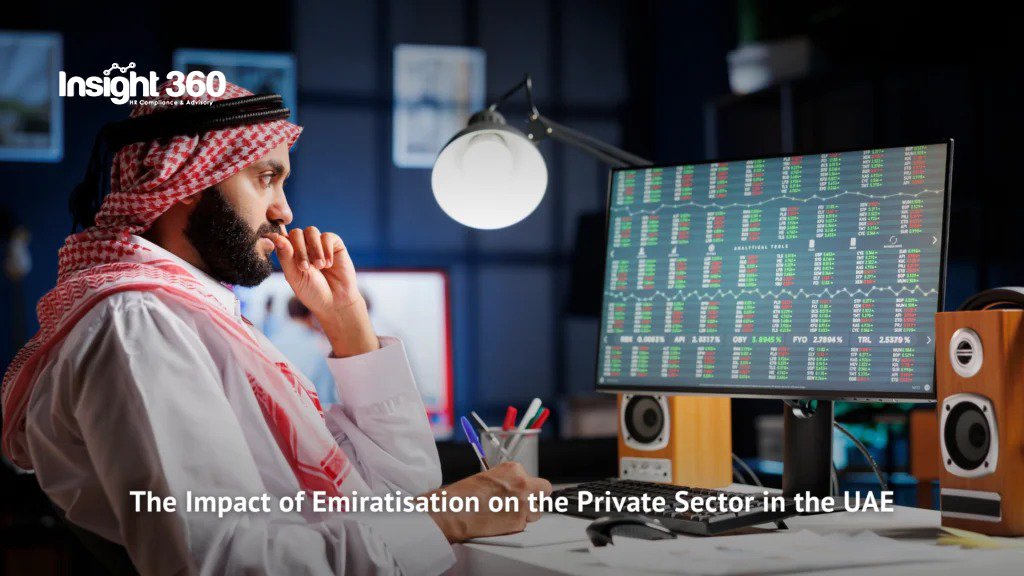
The Impact of Emiratisation on the Private Sector in the UAE 

The UAE, as a rapidly growing economy in the Gulf, has long been dependent on foreign labor to drive its diverse industries. However, in recent years, the government has made significant strides in a policy known as Emiratisation, aimed at increasing the number of Emirati nationals in the workforce, particularly within the private sector. The purpose of Emiratisation is to reduce the country’s reliance on expatriate workers, promote local talent, and create sustainable, long-term economic growth driven by a more diverse and highly skilled national workforce.  Emiratisation  Emiratisation refers to the UAE’s national strategy to create job opportunities for Emirati nationals, focusing on sectors traditionally dominated by foreign workers. The government’s goal is to increase Emirati employment in both the private and public sectors by offering various incentives to employers. These initiatives have been critical in reshaping the UAE’s labor market and ensuring that Emiratis are not only represented but also thrive in a competitive global economy.  The UAE government has introduced a range of policies to push for Emiratisation, including mandates for private companies to hire a certain percentage of Emirati workers, particularly in key sectors such as banking, healthcare, retail, and hospitality. In addition, Emiratisation policies are supported by a range of educational and skill-building programs that help young Emiratis gain the necessary qualifications to enter these industries.  Challenges Faced by the Private Sector  Despite the clear advantages of Emiratisation, its implementation in the private sector has been met with several challenges. One of the primary obstacles faced by companies is the perception that Emiratis may lack the required skills or experience to compete with expatriate workers. This is particularly true in specialized fields like engineering, IT, and financial services, where foreign workers have traditionally filled the talent gap.  Moreover, the private sector is often concerned with the higher salary expectations of Emirati employees. National workers tend to have different compensation expectations compared to expatriates, particularly in senior positions, which can lead to higher operational costs for businesses. This, in turn, can affect profitability, especially in industries where profit margins are already tight.  Another challenge is the need for companies to invest in training and development programs to bring Emiratis up to speed. As the UAE transitions to a knowledge-based economy, employers must provide adequate resources to ensure that national workers are not only qualified but also capable of performing at the highest levels. This may require a substantial investment in mentorship, ongoing education, and career development programs, which can be time-consuming and costly for employers.  Benefits of Emiratisation for the Private Sector  Despite these challenges, the Emiratisation initiative offers several long-term benefits for private companies operating in the UAE.  1. Reduced Dependency on Expatriates  One of the most significant advantages of Emiratisation is that it reduces the private sector’s dependency on foreign workers. As the government continues to implement policies to encourage national employment, companies that embrace Emiratisation will find themselves in a more sustainable position, especially as expatriate labor markets become more competitive.  2. Enhanced Corporate Reputation  Companies that actively embrace Emiratisation enjoy a better reputation both locally and internationally. Being recognized as a supporter of the government’s vision for a diversified workforce demonstrates a commitment to sustainable economic growth. Furthermore, businesses that prioritize Emiratisation can contribute to national pride and position themselves as responsible corporate citizens, which is essential for long-term success in the UAE market.  3. Government Incentives and Support  To help companies meet their Emiratisation targets, the UAE government provides several incentives, such as funding for training programs, recruitment subsidies, and tax breaks. These incentives make it more financially feasible for businesses to invest in local talent and participate in the Emiratisation process without jeopardizing profitability.  4. Access to a Skilled Workforce  As part of the Emiratisation initiative, the UAE government has invested heavily in educational programs that equip Emiratis with the skills needed to excel in the private sector. These initiatives ensure that companies can tap into a growing pool of talented and motivated individuals. With the proper training, these national employees can bring fresh perspectives, innovative ideas, and leadership qualities that benefit the private sector and contribute to the country’s overall economic development.  How Private Sector Companies Can Adapt to Emiratisation  For companies looking to successfully implement Emiratisation in the workplace, there are several steps to consider:  1. Implement Effective Recruitment Strategies  Private sector companies need to adjust their recruitment processes to attract qualified Emiratis. Collaborating with local universities, recruitment agencies, and attending career fairs dedicated to Emirati job seekers is a good starting point. Furthermore, businesses should focus on creating roles that are tailored to Emiratis’ strengths, focusing on positions where national workers can thrive and progress.  2. Invest in Training and Development  For Emiratisation to be successful, businesses need to make training and development a priority. Companies should design mentorship programs, offer skill-building workshops, and ensure that Emirati employees have clear career progression pathways. Training initiatives should focus on both technical skills and leadership development, preparing Emiratis for key roles within the organization.  3. Foster an Inclusive and Supportive Work Environment  Embracing Emiratisation also means fostering an inclusive workplace that celebrates diversity and provides equal opportunities for career growth. Offering flexible work arrangements, mentorship, and internal promotions will help create a supportive environment where Emiratis feel valued and motivated to stay and grow within the company.  4. Develop Long-Term Emiratisation Strategies  Emiratisation is not just about filling quotas; it’s about long-term workforce planning. Companies should develop strategies that incorporate Emirati talent into the company’s future growth plans. This could involve creating a talent pipeline, engaging with local universities, and fostering partnerships with the government to meet Emiratisation targets.  Conclusion Navigating the intricacies of Emiratisation can be challenging for private sector companies, especially when it comes to recruitment, training, and compliance with government regulations. This is where Insight 360 HR Consultant can be a valuable partner. With their extensive expertise in the UAE’s labor laws and Emiratisation requirements, Insight 360 can assist companies in developing effective strategies for hiring,

Blog

How to Transfer Your Family Visa to a New Employer in the UAE

The UAE is home to a vibrant expatriate community, and many people come to the country with their families in tow. One of the most common ways expatriates bring their families to the UAE is through a family visa, which allows them to sponsor their spouses, children, and in some cases, their parents or domestic helpers. However, what happens if an expatriate decides to change employers while they are in the UAE? The good news is that it is possible to transfer your family visa to a new employer. While this process can seem complicated, understanding the steps involved will ensure a smooth and efficient transition. Below, we’ll guide you through the necessary steps to transfer your family visa to a new employer in the UAE. Family Visa Transfer Process In the UAE, the family visa is tied to the primary visa holder—the sponsor (typically the father or husband). If the sponsor changes employers, they are still the legal sponsor of their family members. However, when the sponsor moves to a new employer, the family visa needs to be transferred or amended to reflect the sponsor’s new employment status. This process involves several steps, including applying for a new residency permit for the sponsor, updating the sponsor’s details with the UAE authorities, and adjusting the family members’ visa status accordingly. Check Eligibility for Visa Transfer Before initiating the transfer, the first thing to do is ensure that the new employer is eligible to sponsor your family. In the UAE, sponsorship eligibility is based on the salary and employment status of the sponsor. Typically, a sponsor must have a minimum monthly salary, which can vary depending on the emirate, to be eligible to sponsor their family. For example: Additionally, you should confirm with your new employer if they are willing to continue sponsoring your family visa or if the visa transfer will need to be done independently by you. Complete the Sponsor’s Employment and Residency Process When you switch employers, the first step is to complete the residency and labor formalities with your new employer. This includes: Once the new employment visa is approved, you will have the legal status to sponsor your family members under the new visa. Update Family Visa Details After obtaining your new residency status, you can proceed to update the details of your family members’ visas. The steps for transferring a family visa to a new employer are as follows: Complete Medical and Emirates ID Procedures Once the new family visas are approved, your family members will need to undergo medical testing, if required. This is generally required for all expatriates entering or remaining in the UAE. Additionally, you’ll need to apply for new Emirates IDs for your family members, as their previous IDs will be canceled with the old visa. Once the medical exams are cleared and the Emirates IDs are processed, your family will receive their new residency permits and identification documents, making them officially registered under your new employer’s sponsorship. 6. Final Steps Once your family visa transfer is complete, make sure to: Conclusion Transferring your family visa to a new employer in the UAE is entirely possible, but it requires careful planning and attention to detail. By ensuring your eligibility with the new employer and completing the necessary employment visa process, you can ensure a smooth transition. If you’re unsure about the specific requirements or need assistance with the family visa transfer, it’s highly recommended to consult with Insight 360 Corporate Consultants. Our experts can guide you through the process, helping you avoid delays or complications. With proper preparation and expert guidance from Insight 360, transferring your family visa to a new employer in the UAE is a manageable and seamless process, ensuring your family can continue to live with you without any disruption.

Scroll to Top